
edit szabo
Investigating how silicate materials connect environmental, cultural and architectural systems, revealing new possibilities through transformation.
edit szabo
Investigating how silicate materials connect environmental, cultural and architectural systems, revealing new possibilities through transformation.
My practice brings together artistic research, architecture and material innovation through silicate materials. While it results in objects, architectural materials, systems and public interventions, these are not the final destination but evidence of an ongoing investigation into how silicate materials connect environmental, cultural and architectural systems, revealing new possibilities through specific transformations.
Projects range from experimental materials and architectural applications to environmental systems and companion objects, yet they are all driven by the same investigation: how new possibilities emerge when relationships between materials, systems, histories and forms of knowledge are reorganised.
THE INVESTIGATION
I am interested not only in transformation itself, but in those transformations that reorganise relationships and reveal new possibilities.
The investigation begins by returning to the foundations of a question. Through silicate materials, I explore how relationships between materials, systems, histories and forms of knowledge can be reorganised to reveal possibilities that were not previously visible.
I work with silicate materials because they are one of humanity's greatest material resources for addressing future challenges. Their remarkable capacity for transformation, combined with long-term durability, makes them a powerful medium for investigating how environmental, cultural and architectural systems might become otherwise.
One question has guided my practice:
What new possibilities emerge through metamorphic transformations that reorganise relationships between materials, systems, histories and forms of knowledge?
I use four investigative lenses to explore the same question from different perspectives. They are not categories of work, but different ways of understanding each investigation. Individual investigations often operate through several lenses simultaneously.
ENVIRONMENTAL AGENCY
How can silicate materials actively participate in environmental systems?
Investigating how silicate materials connect climate, place, industry, culture and architecture to shape more regenerative built environments.
→ Read projects
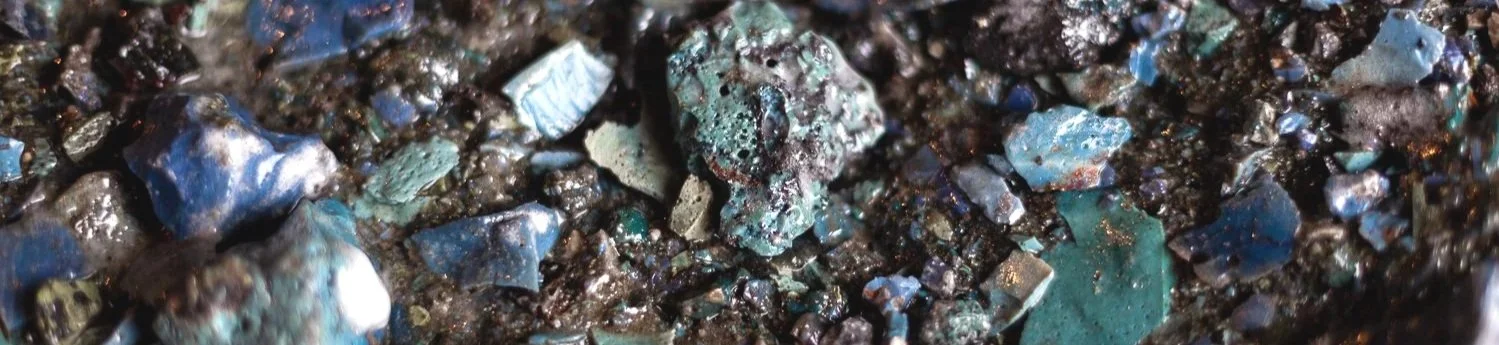
METAMORPHIC REGENERATION
How can metamorphic transformations regenerate places, histories and environmental systems?
Investigating regeneration through metamorphic transformation across industrial heritage, geological processes and cultural memory.
→ Read projects

MATERIAL AGENCY
How can silicate materials acquire new roles through new relationships?
Investigating how new relationships reveal material possibilities beyond conventional applications.
→ Read projects

COMPANIONS
How can silicate materials shape meaningful relationships between people and the living world?
Investigating how objects become companions through material, perception and everyday rituals.
→ Read projects
Transformation makes time visible.
History makes relationships understandable.
Materials make relationships tangible.
New possibilities begin with connection.