
Metallurgical by-products often remain environmental scars despite containing unique mineral compositions and visual qualities.
This investigation explores how metamorphic processes can stabilise these industrial residues and transform them into durable architectural materials, while preserving the geological and cultural narratives embedded within their place of origin.
Collected from the historic iron-mining region of the Harghita Mountains in Transylvania, the materials connect volcanic geology, industrial heritage and contemporary architectural research. Industrial landscapes often preserve geological and cultural histories that gradually disappear from everyday life. This investigation explores how metallurgical residues can become carriers of those histories, reconnecting geological processes, industrial heritage and contemporary material culture.
2023
Geology ↔ Architecture
Industrial Heritage ↔ Contemporary Design
Waste ↔ Material Innovation
Regional Identity ↔ Architectural Expression
Waste ↔ Identity
Material Stabilisation for architectural use
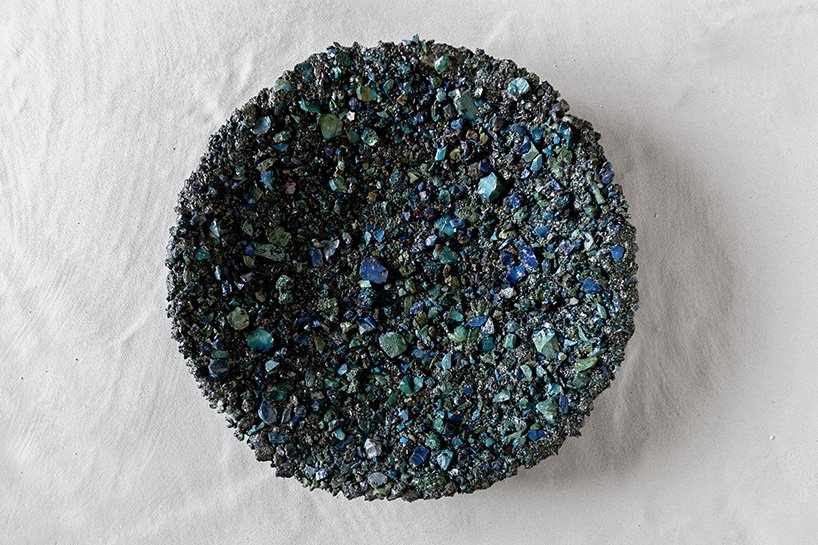
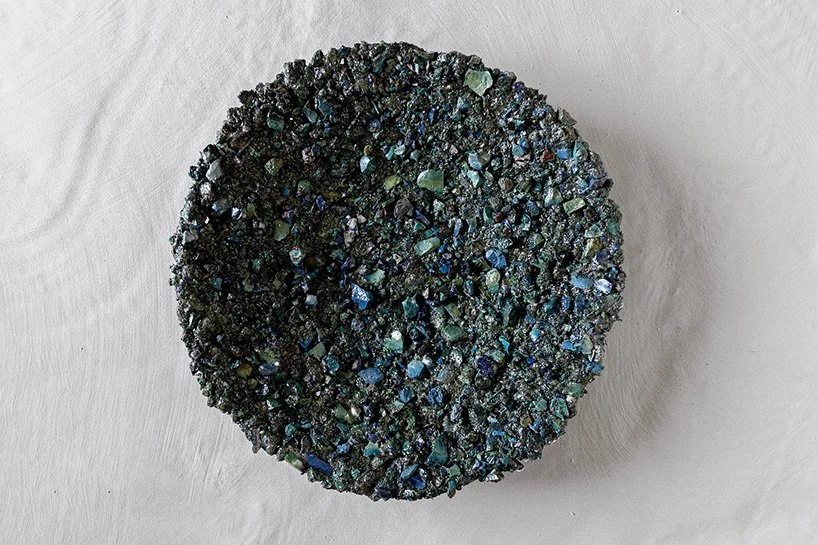
The investigation focuses on the controlled firing of historic blue metallurgical slags. The Metamorphic process stabilises the material particles into a stable element while preserving its distinctive mineral appearance, enabling new architectural applications.. The process transforms unstable industrial residues into durable architectural materials suitable for future façade applications.
The research explores how geological by-products can generate a new architectural language rooted in their mineral origin.


The Harghita Plateau
All materials originate from the former iron-mining settlements of the Harghita Mountains in Transylvania, where volcanic geology, mineral springs and metallurgy shaped both the landscape and local identity. Rather than treating these industrial remnants as waste, the investigation asks how they can continue their story through new material forms.





Old photos about the iron-foundry at Szentegyháza, Harghita Plateau, Transylvania.


